


For many homeowners, small jobs around the house were once part of the weekend routine. A loose railing, a dripping faucet, a tangle of sticks from the birch trees, or a light fixture that needed replacing may have been something you handled yourself — or something a spouse, family member or neighbor took care of.
But things change. You decide doing chores during a scorching July isn’t your cup of tea anymore. Climbing up on the ladder (something you never really liked) is now enough to make your insides flip. Contorting like a gymnast to get under the sink is way more uncomfortable than it used to be. Or maybe you just decide there are better ways you want to spend your Saturdays.
The thing is … you’ve never hired anyone before.
And when someone is working in or around your home, you want to do things the right way, even if it takes a few extra steps. Because in addition to installing a new ceiling fan, you want to protect your money, your home and your peace of mind.
Start with the basics
Before you hire someone, know what kind of work needs to be done. Mowing the lawn is different from trimming trees. Replacing a faucet is different from plumbing a shower in a new bathroom. Changing an outlet is different from rewiring a box.
Try to describe the job as clearly as you can. What needs to be fixed, cleaned, installed or replaced? Is the work inside or outside? Does it involve water, electricity, gas, a roof, a ladder or anything that could affect safety?
That simple step can help you decide whether you need a handyman, lawn service, plumber, electrician or licensed contractor.
Check before you hire
Before making home repairs, the Federal Trade Commission recommends asking people you trust for recommendations, checking that companies have licenses and insurance, getting three written estimates, reviewing and signing a written contract and avoiding payment by cash or wire transfer.
Licensing rules can vary depending on where you live and what kind of work is being done. This means that fall leaf removal probably doesn’t have the same requirements as plumbing, electrical work or major home repairs. When in doubt, check with your state, county or city before work begins.
The FTC also recommends confirming a contractor’s license with state or county government and asking for proof of insurance.
This is especially important for work that could affect your home’s structure, wiring, plumbing or, again, safety. Lower cost may not be worth it if the person isn’t qualified to do the job.
Get more than one estimate
For larger jobs, try to get written estimates from more than one person or company.
The estimate should clearly explain what work will be done, what materials may be used, the expected cost and when the work should be finished. An itemized estimate can be helpful to see differences in how each contractor approaches the project and where you may be able to negotiate.
Comparing estimates can help you spot a price that seems much higher or much lower than the others. It can also help you ask better questions before you agree to the work.
Get it in writing
Do not rely only on a handshake deal. Before work begins, get a written contract or written agreement. It should include the work to be done, the cost, the payment schedule and any important details about materials, timing or cleanup.
Take time before signing. Do not sign anything with blank spaces. If something doesn’t make sense, ask. If you feel rushed, pause.
The FTC lists pressure to make an immediate decision, requests for full upfront payment, cash-only payment and offers involving a lender the contractor knows as signs of a possible home improvement scam.
Be careful with door-to-door offers
Some warning signs are easy to miss because they sound helpful at first. Someone may knock on your door and say they are working in the neighborhood. They may say they noticed a problem with your windows, roof, driveway, trees or gutters. They may say they have materials left over from another job and can give you a deal.
The FTC identifies door-to-door offers from someone claiming to be “in the area” and claims about “leftover materials” as warning signs of a possible home improvement scam.
That doesn’t necessarily mean they’re dishonest. But it does mean you should probably not agree to work on the spot. Check the company, get the details in writing and compare your options first.
What about reviews or recommendations?
Recommendations and reviews can help, but they should not be your only check.
Ask someone you trust if they hired the person for similar work and would hire them again. Online reviews can add another proof point, but the FTC says some online reviews can be fake, deceptive or manipulated.
Know where to turn
If something feels wrong, do not ignore it. Fortunately, there are state consumer protection offices that can help with complaints against businesses, scam investigations and fraud concerns. Your state attorney general can also be a resource.
The good news is that you don’t need to be an expert to hire help around the house. You just need to slow the decision down enough to check the basics. A little caution before the work begins can save you a much bigger problem later.
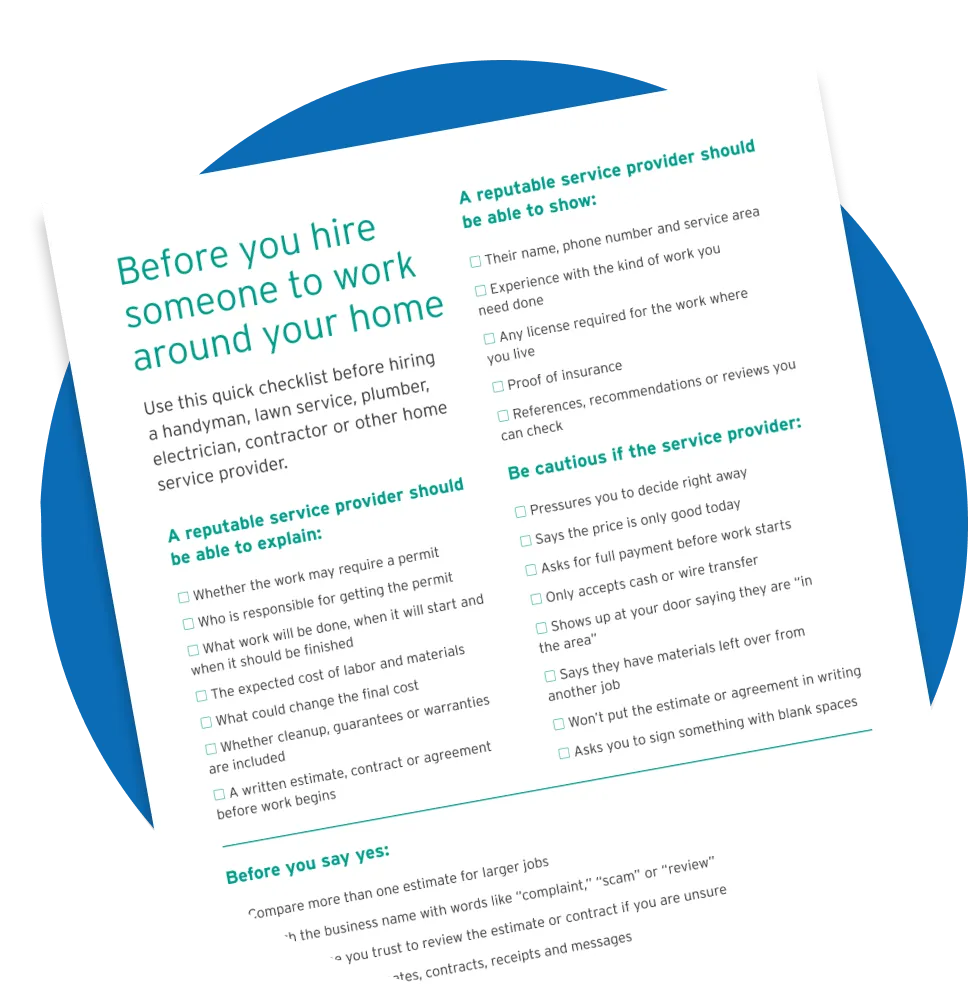
Get your free Service Provider Checklist

You may also like …
 Your Pets
 Let’s Eat
 Live Well
 Spare Time

Join our community
Get news and tips you can feel good about on topics to help you live life better, including health, money, home and lifestyle — plus much more.