

Protein is a hot topic these days.
From food labels to dinner conversations, it’s hard to avoid questions like: How much protein do we need daily? Am I getting enough? And why is it suddenly in snacks and drinks that never had it before?
Protein may be getting a lot of attention right now, but there’s a good reason for the buzz.
What is protein?
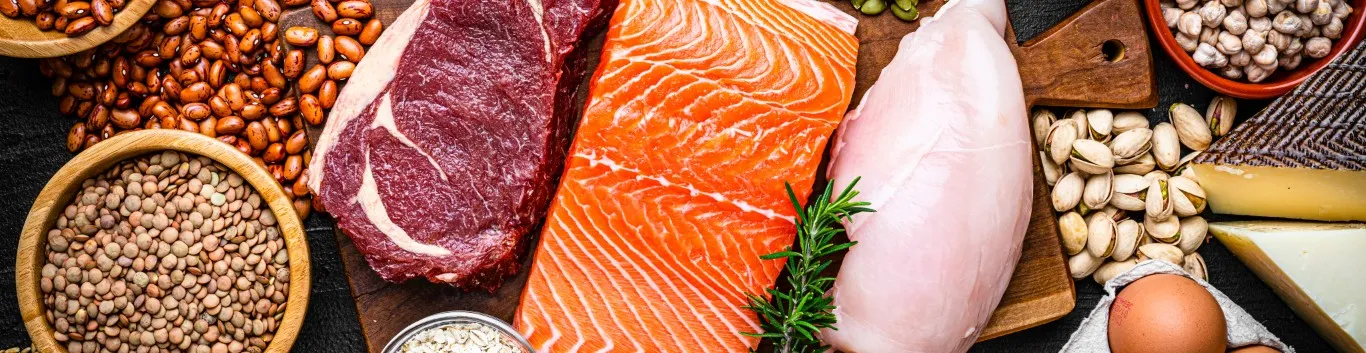
Food is made of three main parts: carbohydrates, fats and protein. Protein — most commonly found in meat, fish, dairy and eggs — is made up of amino acids that create important tissues, like skeletal muscle in the body.
Consuming the right amount of protein can help give your body the tools it needs to stay healthy, active and strong. Protein also supports the immune system, helps wounds heal and plays a key role in keeping bones strong.
Why protein matters more as you age
After middle age, it becomes harder to gain — or even maintain — muscle. Around age 30, we naturally lose 3%-5% of muscle mass each decade, and we continue to lose at a faster pace after age 60.
This age-related muscle loss is called sarcopenia. It affects about 10%-20% of older adults and nearly half of adults over age 80. Over time, sarcopenia can increase the risk of falls, broken bones, hospitalization and loss of independence — but the right combination of movement and protein can help slow the process.
Many older adults don’t get enough protein. Studies show that more than one-third of adults over 50 don’t meet daily protein recommendations, even though their needs are higher than when they were younger.
How much protein do you need as an older adult?
Experts recommend that people 65 and older aim for about 1.0 to 1.2 grams of protein per kilogram of body weight per day. For a 165-pound adult, this ends up being roughly 90–120 grams of protein per day. If you’re active, you may benefit from even more.
Rather than having the majority of your protein at dinner, try to spread it throughout the day. A good goal to follow could be to have 20-30 grams of protein at each meal, with a snack or two of 10-20 grams, depending on your daily protein recommendation.
Signs you may not be getting enough protein
If a daily protein intake isn’t on your radar, maybe the way your body feels is. Low protein intake isn’t always obvious, but some common signs can include:
Fatigue and weakness
Muscle loss or decreased strength
Brittle hair and nails and skin problems
Slow wound healing
Frequent illness or infections
Swelling (Edema)
Anemia
Mood changes or brain fog
These symptoms aren’t a normal part of aging and can have many causes, but low protein intake may be one possible contributor.
Getting enough protein doesn’t require a major diet overhaul. Small, consistent choices at meals can help support your strength and independence over time.
For personalized protein advice, be sure to talk to a doctor who knows your health needs and lifestyle.
You may also like …
 Your Pets
  Let’s Eat
  Live Well
  Spare Time
Join our community
Get news and tips you can feel good about on topics to help you live life better, including health, money, home and lifestyle — plus much more.